
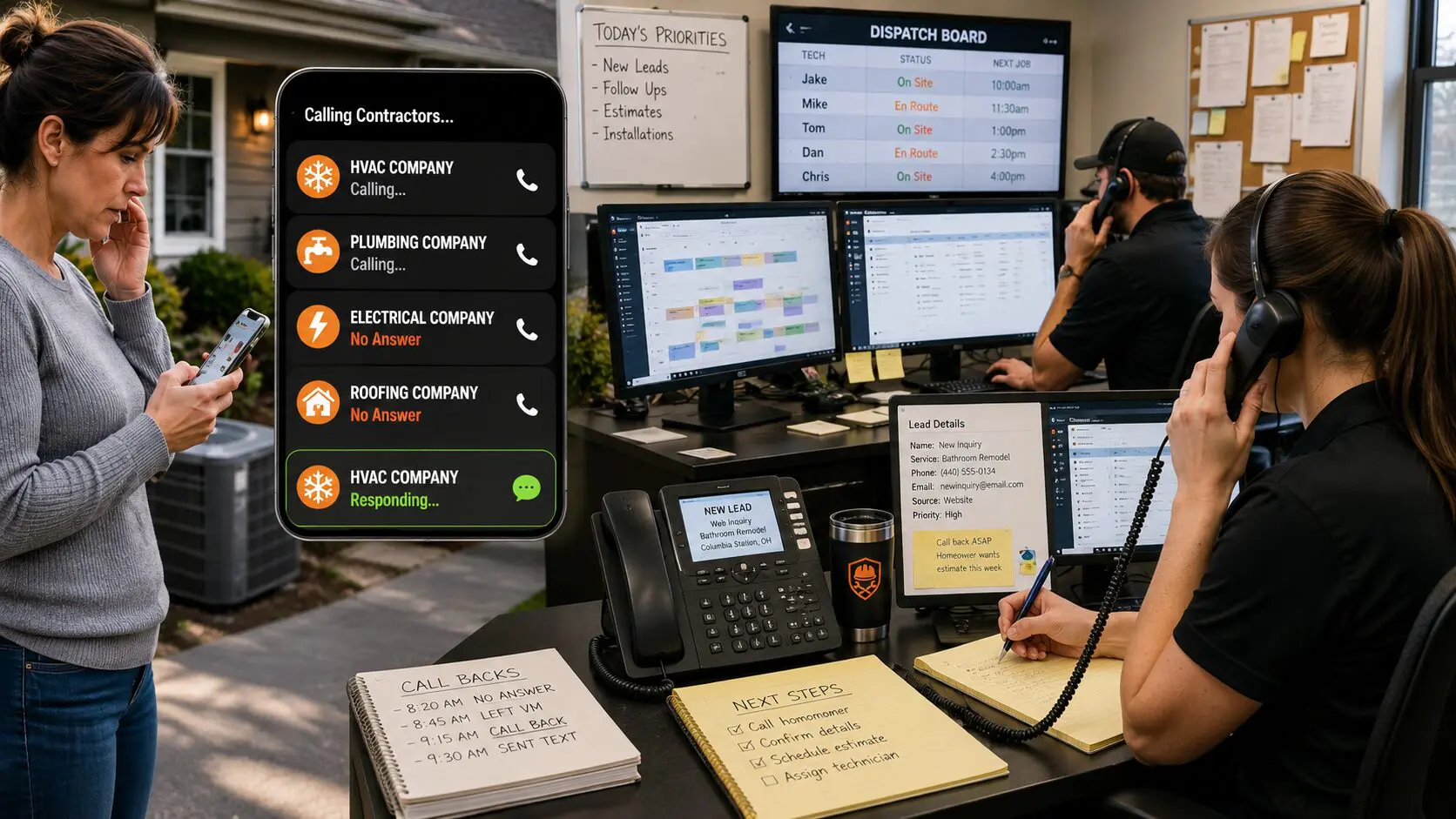
The First Contractor To Respond Usually Gets The Job.
Most homeowners contact multiple contractors at the same time. The company that responds first often earns trust and books the opportunity before pricing is even discussed.
LEAD RESPONSE TIMELINE
Speed To Lead Starts Before The Customer Compares Price
When a homeowner has a problem, they usually contact more than one contractor. The first company to respond clearly, professionally, and quickly has the best chance to control the conversation.
Slow response gives the customer time to keep searching, call another company, or book with the contractor who made them feel handled first.
Price still matters, but speed often decides who gets the opportunity before price is even discussed.

REVENUE LEAKAGE
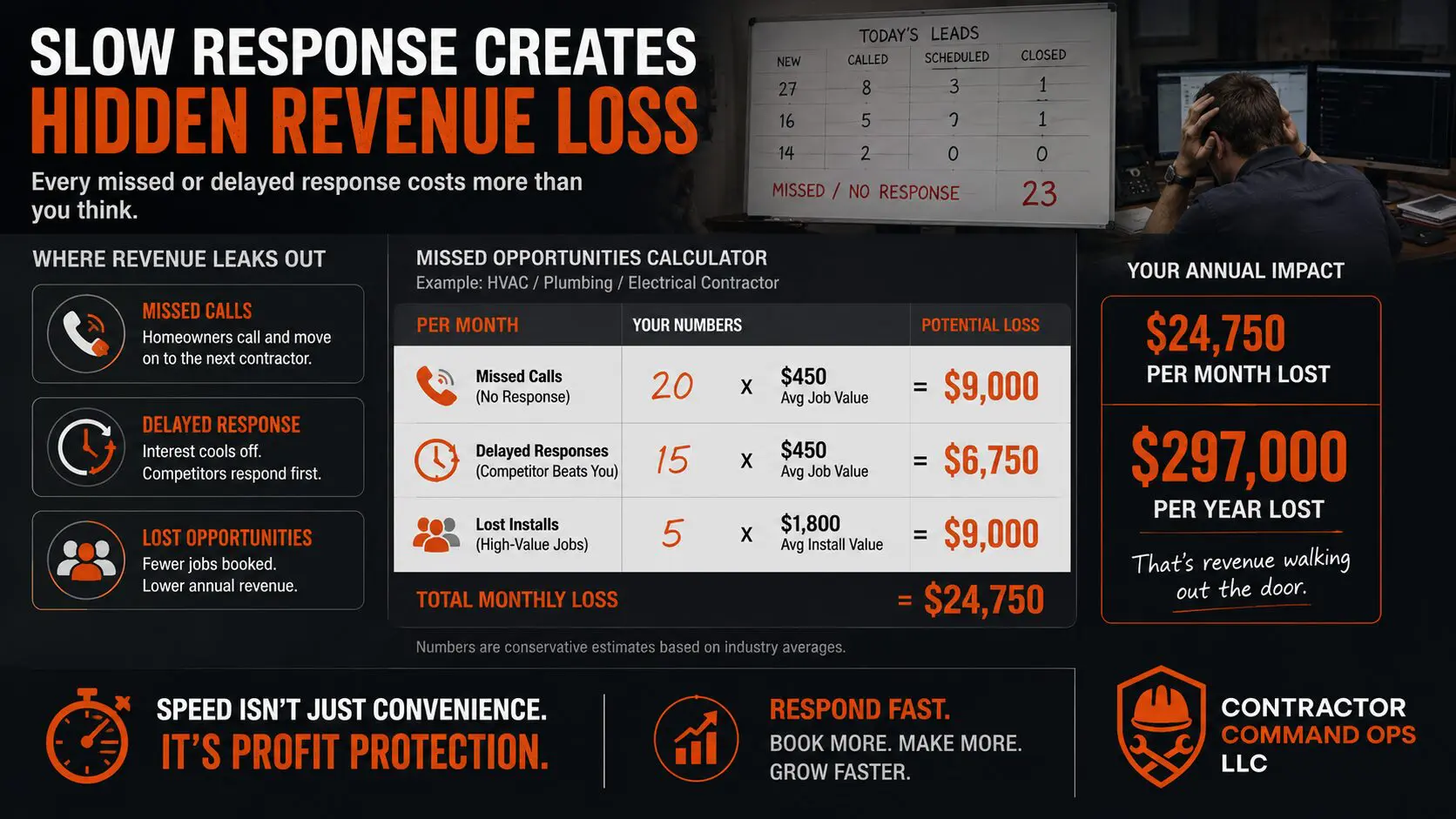
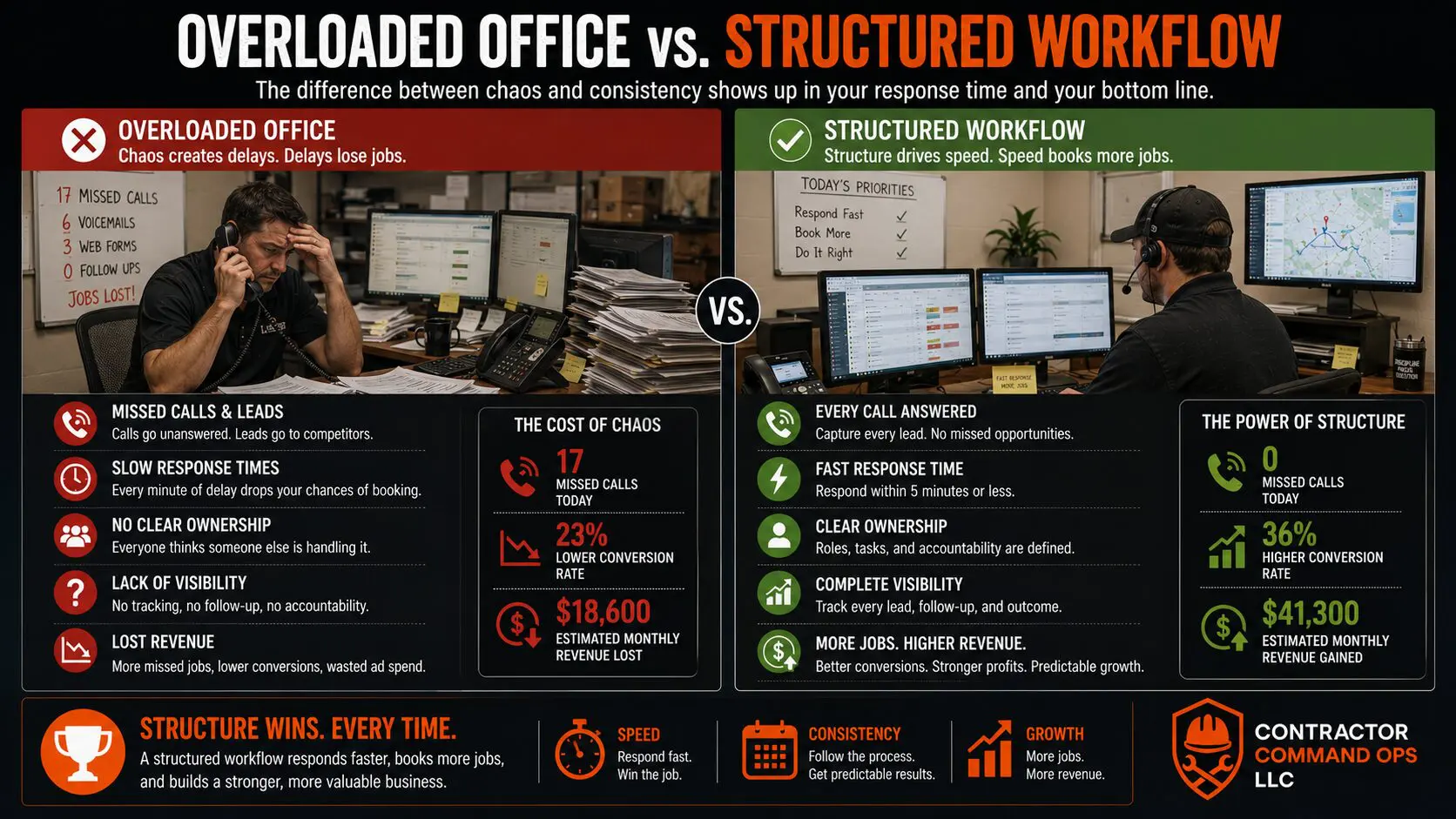
Slow Response Turns Paid Leads Into Lost Revenue
Every lead has a short window of attention. When the office waits too long to respond, that window closes.
The customer may still need the work done, but they are no longer waiting for your company. They are calling the next contractor, answering another estimate request, or booking with whoever responded first.
That means the marketing money was already spent, the opportunity already came in, and the revenue was still lost because the response was too slow.
DISPATCH WORKFLOW
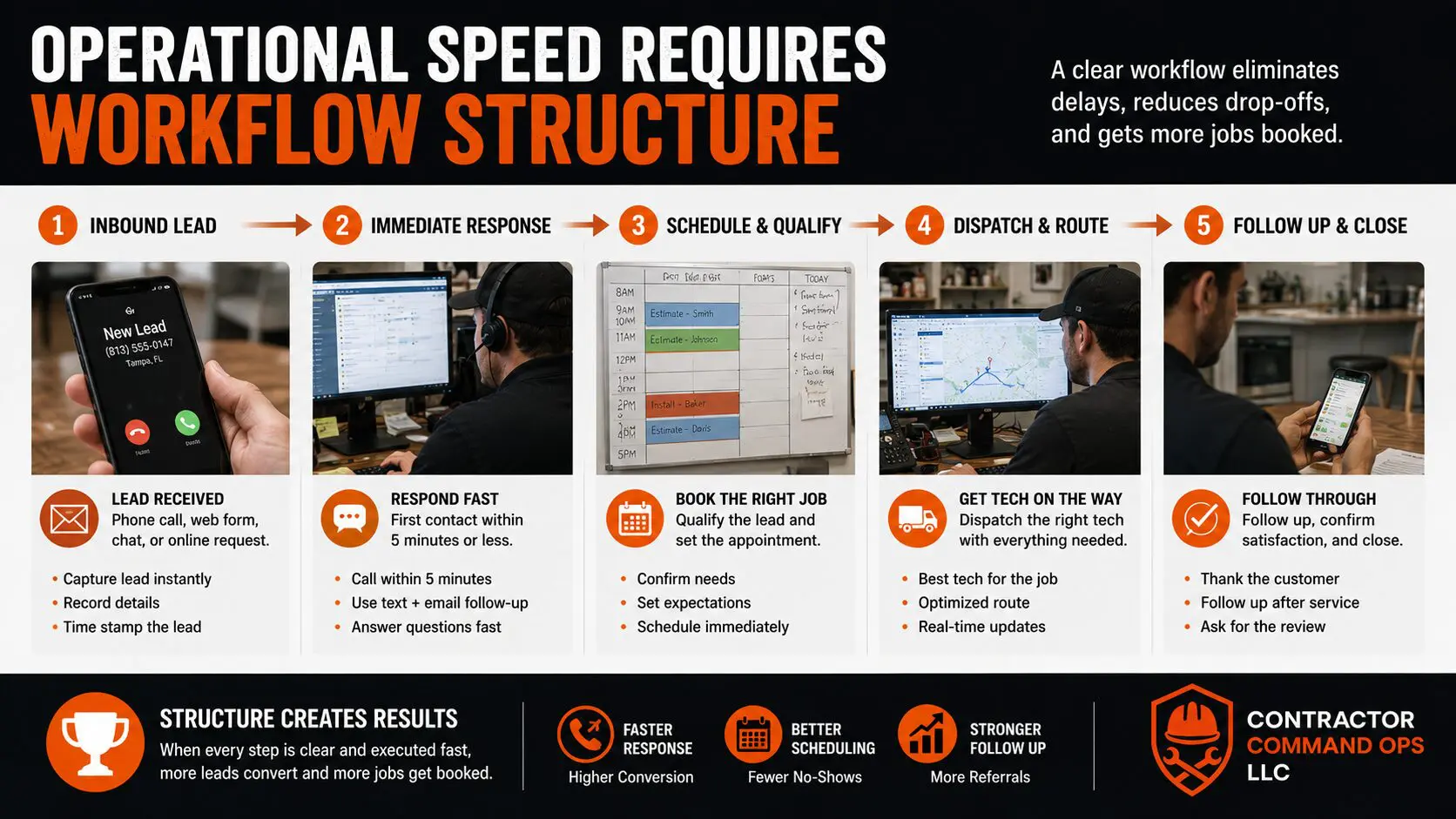
Fast Response Only Works If The Office Can Move The Job
Winning the lead is only the first step. The office still has to schedule the job, communicate with the customer, coordinate the technician, and keep the work moving.
When response is slow, dispatch usually feels it next. Appointment windows get messy, technicians wait for details, customers call back for updates, and the office starts reacting instead of controlling the workflow.
Speed to lead is not just about answering faster. It is about moving the customer from inquiry to scheduled job without letting the office become the bottleneck.
OFFICE BOTTLENECK COMPARISON
Slow Response Usually Starts With An Overloaded Office
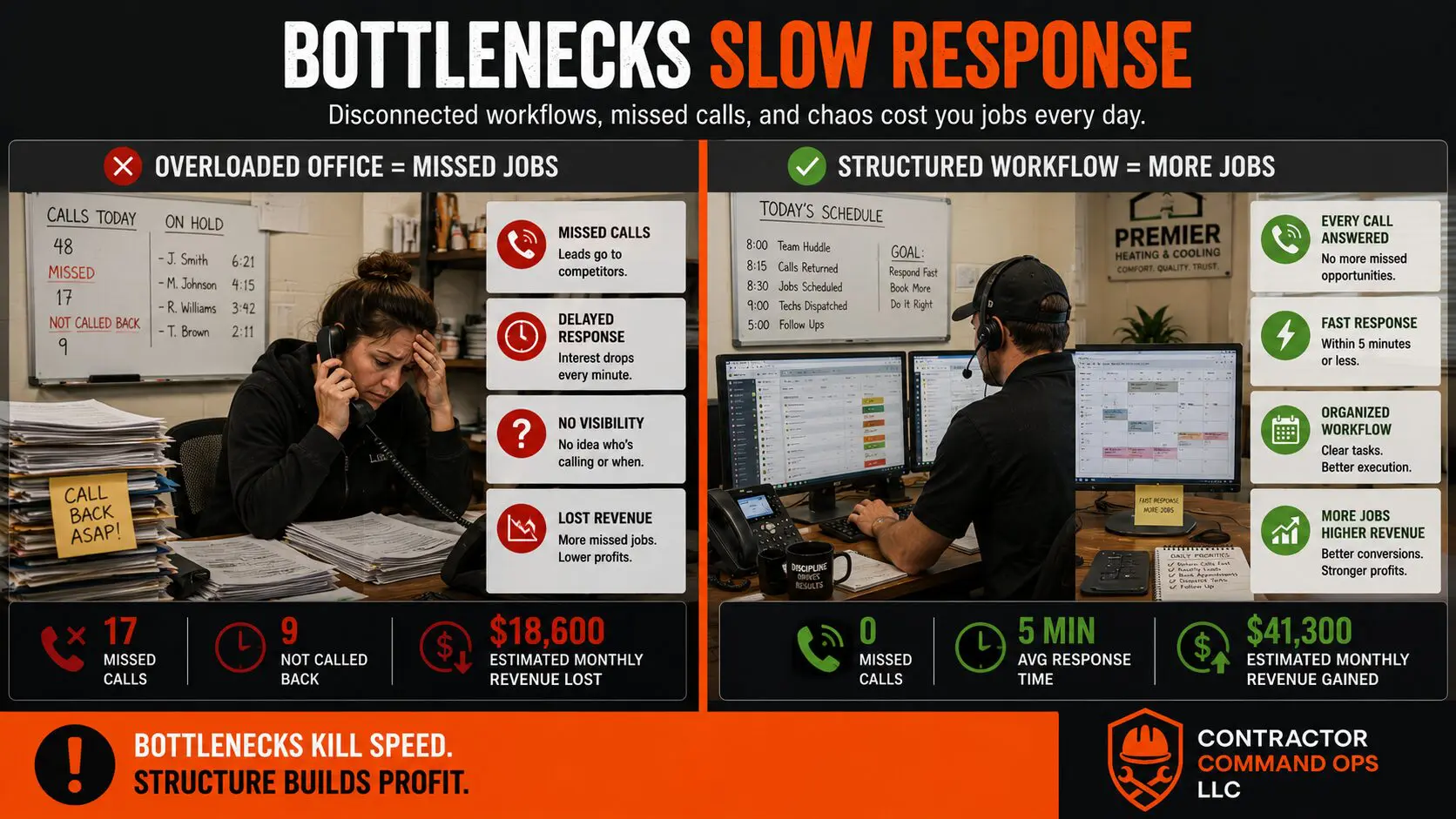
Most contractors do not lose leads because nobody cares. They lose leads because the office is overloaded.
Calls come in while someone is scheduling another job. Follow-ups wait while dispatch problems get handled. New leads sit while the team deals with callbacks, customer updates, technician questions, and paperwork.
The office becomes the bottleneck.
When that happens, response speed becomes inconsistent. Some customers get handled quickly. Others wait too long and move on.
SPEED TO LEAD CONVERSION COMPARISON
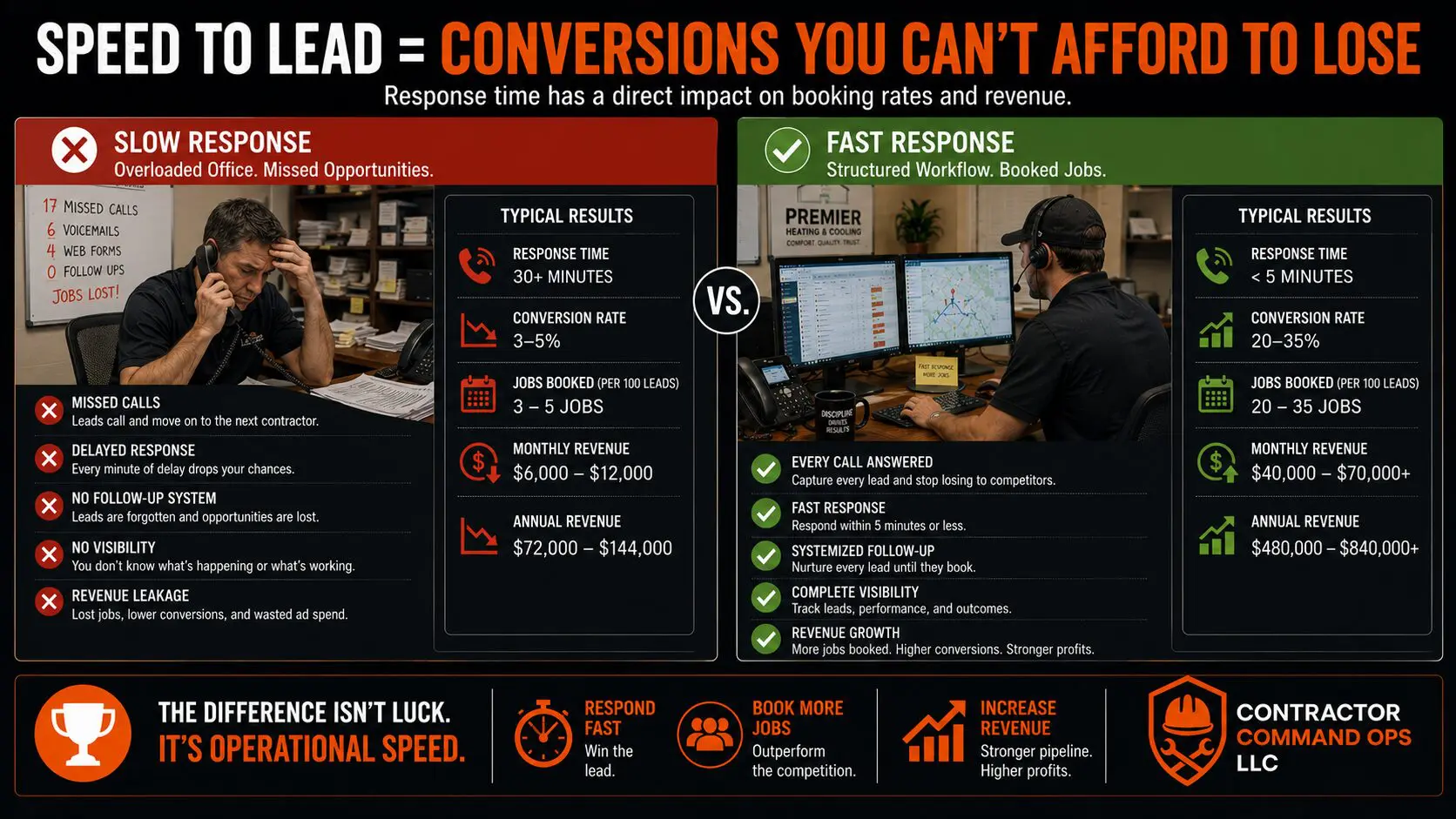
Fast Response Gives You The First Shot At The Job
The first contractor to respond clearly often gets the strongest position.
They answer the question first. They calm the customer down first. They explain the next step first. They get the appointment moving before another company has a chance to compete.
A slower contractor may still be qualified. They may even have better pricing. But if the customer already feels handled, the slower company is fighting from behind.
That is why speed to lead wins more jobs than price.
MOBILE CTA / OFFICE REVENUE LEAK CHECK CTA AREA
Find Out Where Slow Response Is Costing You
Slow response usually does not look like one big failure. It shows up as missed calls, late follow-ups, delayed scheduling, customer callbacks, and leads that quietly disappear.
The Office Revenue Leak Check is designed to help identify where those leaks may be happening inside the office workflow.
If the business is paying for leads but not responding fast enough to control them, the problem is not just marketing. It is the office system.
OPERATIONAL WORKFLOW DASHBOARD
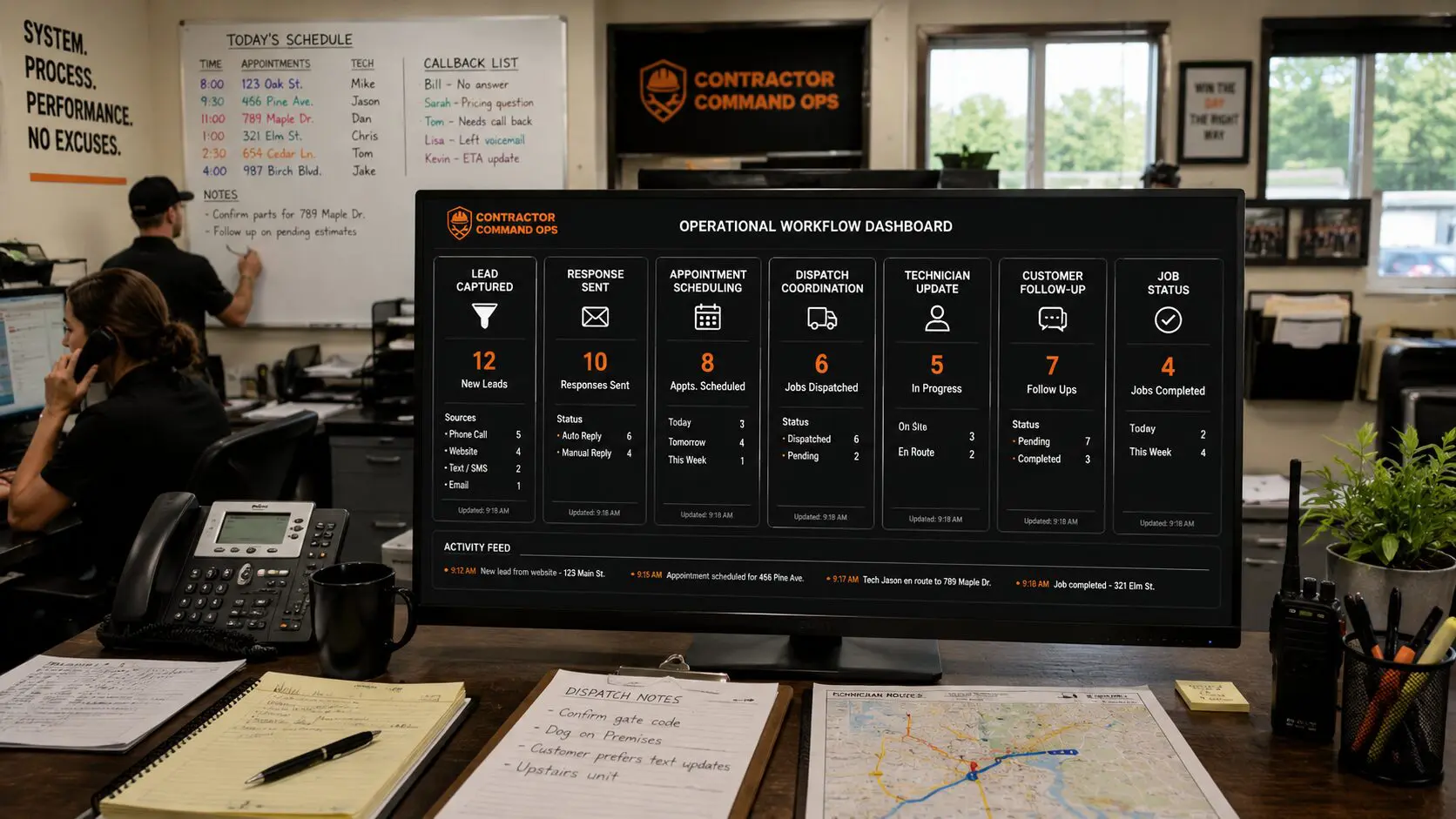
The Office Needs A System That Keeps The Lead Moving
Fast response is not supposed to depend on perfect timing, memory, or someone being free at the exact right second.
The office needs a workflow that helps capture the lead, respond quickly, move the customer toward scheduling, support dispatch communication, and keep follow-up from falling through the cracks.
That is where Contractor Command Ops fits.
The goal is not more software sitting unused. The goal is a cleaner operating system for the office so leads do not stall before they become booked jobs.
AUTHORITY CLUSTER MAP
Speed To Lead Is One Part Of The Bigger Office Problem
Slow response is rarely an isolated issue.
It connects to missed calls, after-hours gaps, scheduling delays, dispatch confusion, customer follow-up, and office bottlenecks.
When those problems stack together, the business does not just lose individual leads. It loses control of the workflow that turns opportunities into booked jobs.
Speed to lead matters because it is one of the first places the office either gains control or starts leaking revenue.

TRUST STRIP / FINAL CTA SUPPORT
Your Competitors Are Responding Faster Than You Think
The contractors who respond first usually control the conversation first.
If your office is missing calls, delaying follow-up, or letting leads sit too long before scheduling, the revenue leak is already happening.
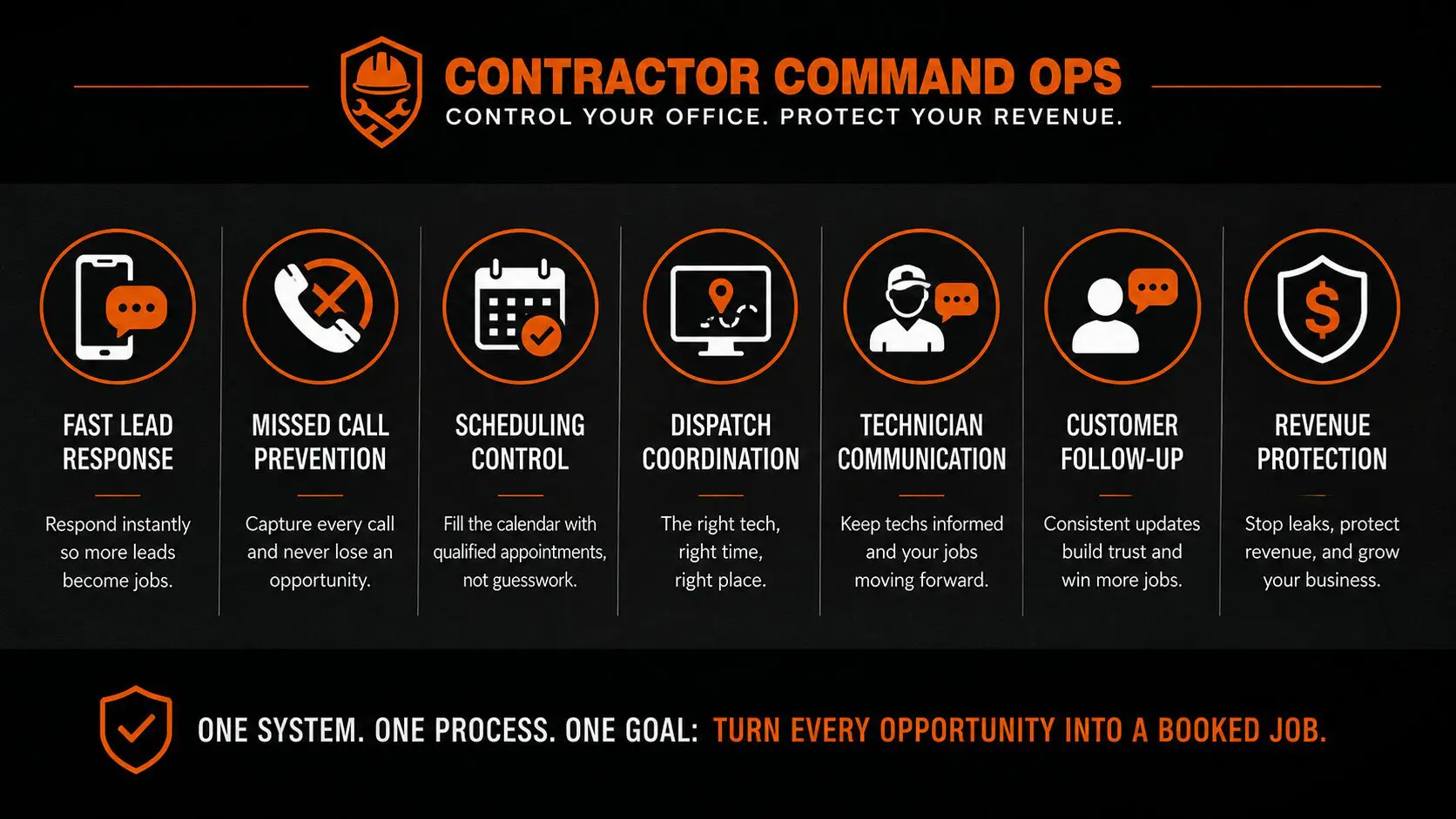
Contractor Command Ops helps identify where the office workflow is slowing down and where better response, scheduling, dispatch communication, and follow-up can help protect more opportunities.
Your competitors are responding faster than you think