
The Hidden Cost of Contractor Office Bottlenecks
A contractor office can look busy and still leak revenue.
Calls get answered late. Follow-ups wait. Scheduling gets messy. Dispatch questions interrupt the day. Customers ask for updates. Technicians need information. The owner steps in to fix what should already be moving.
That is an office bottleneck.
It does not always look like one major failure. It usually looks like a normal busy day that quietly costs the business jobs, capacity, customer trust, and revenue.

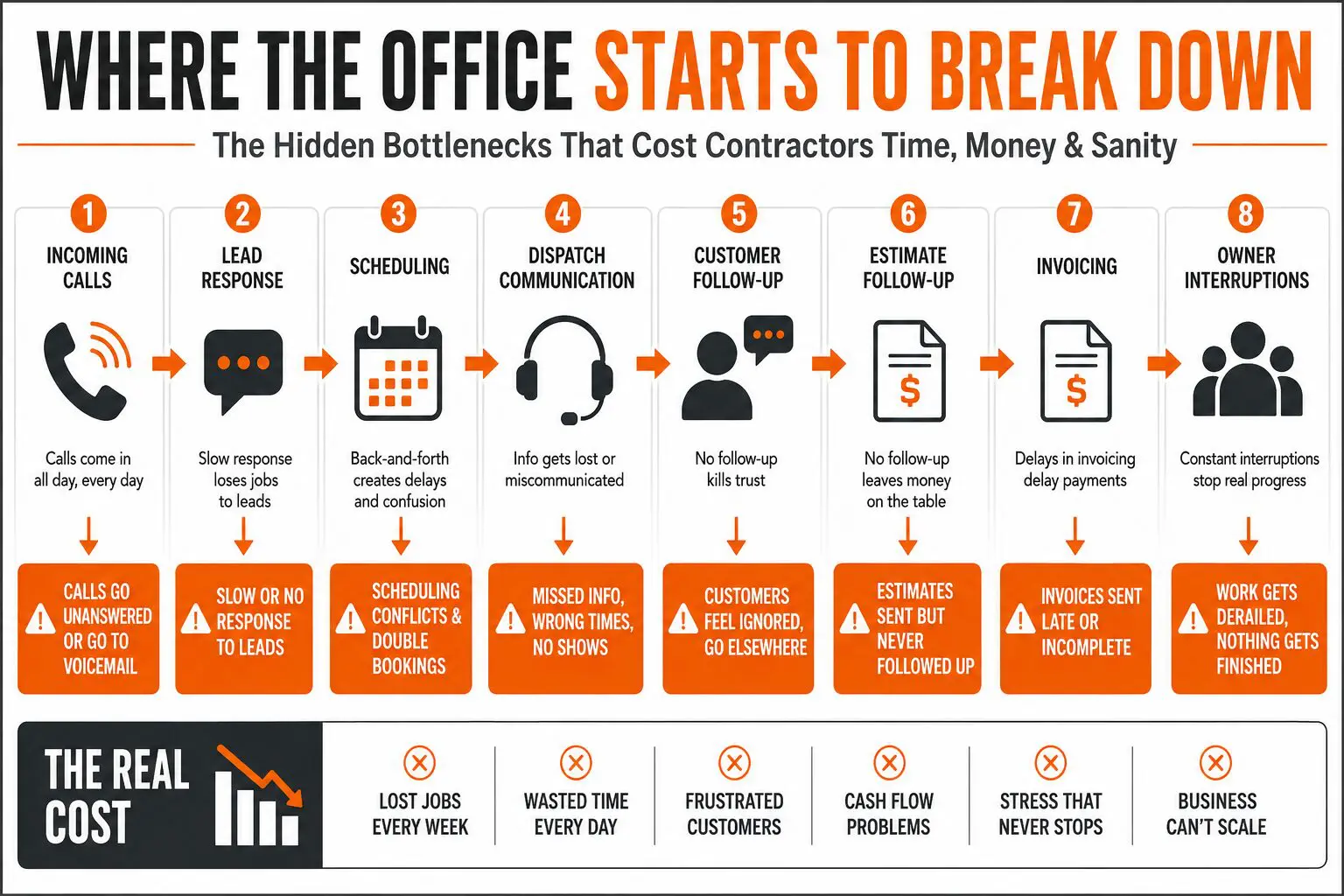
Where Contractor Office Bottlenecks Start
Office bottlenecks usually start when too many important tasks depend on the same small group of people.
One person may be answering calls, scheduling jobs, updating customers, checking technician availability, handling follow-ups, watching email, and keeping the owner informed.
When everything depends on manual attention, the office can only move as fast as the person who is least available.
That is how small delays become missed calls, slow response, scheduling pressure, and customer communication gaps.
The Callback Stack Is A Warning Sign
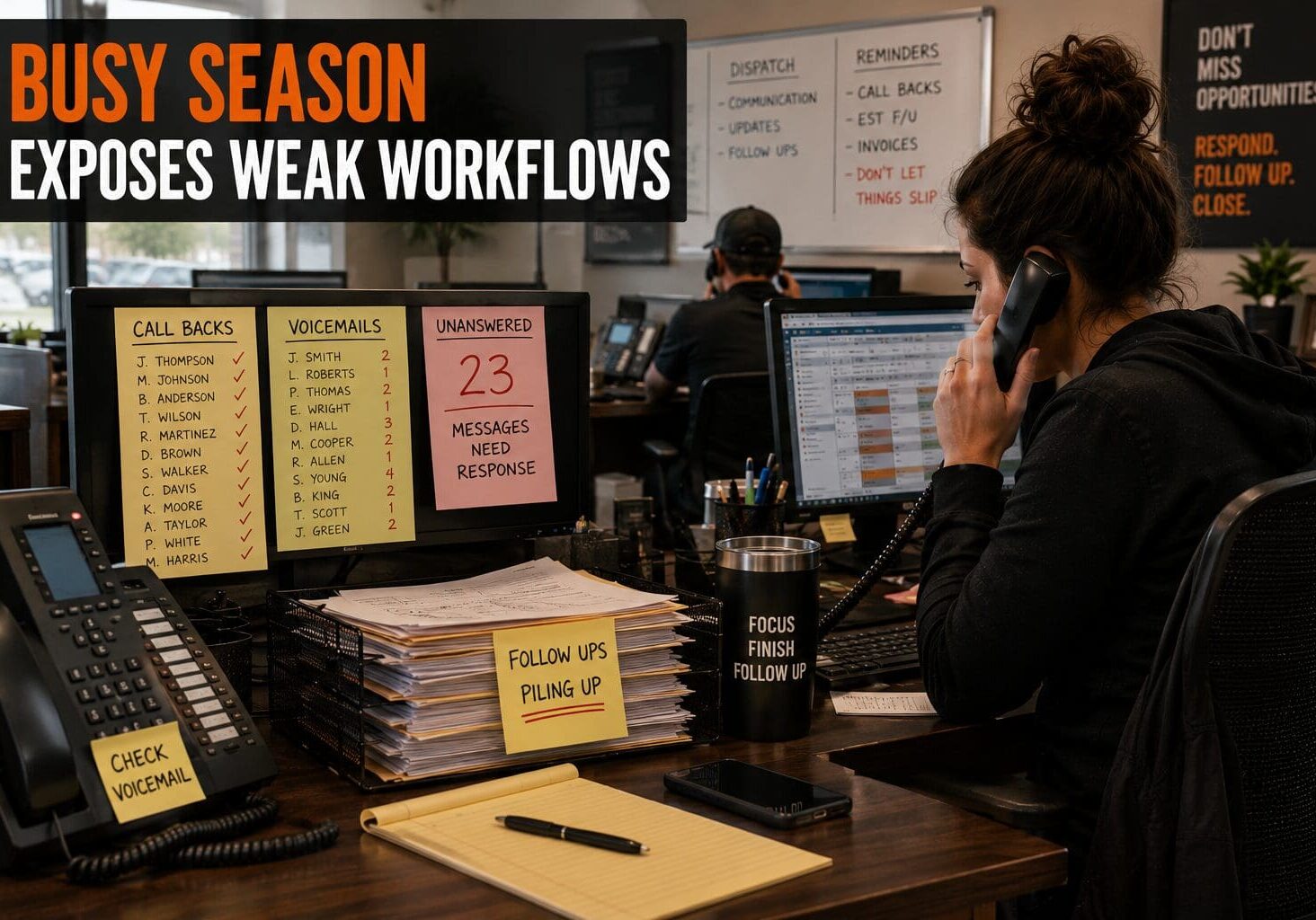
A growing callback list usually means the office is behind the workflow.
Some callbacks are normal. But when missed calls, return calls, estimate follow-ups, customer updates, and technician questions all stack together, the office starts reacting instead of controlling the day.
The problem is not always effort. Most office teams are already working hard.
The problem is that the workflow depends on memory, timing, availability, and constant interruption. That creates a bottleneck even when everyone is doing their best.
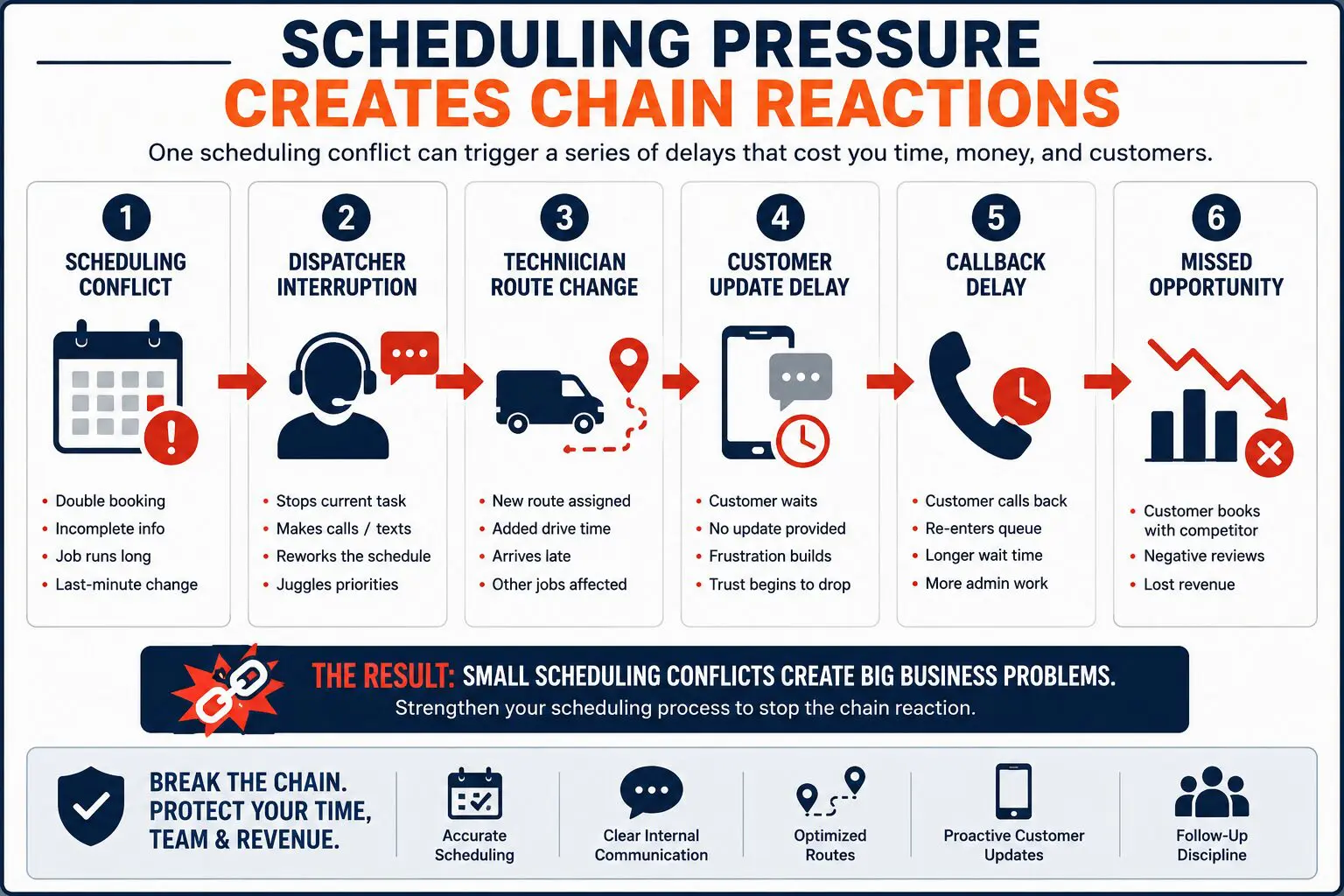
Scheduling Problems Spread Into Dispatch
When the office gets overloaded, scheduling and dispatch usually feel it next.
Appointment windows shift. Technicians wait for updates. Customers call back for arrival information. New leads sit while the team solves problems from earlier in the day.
That creates a loop.
The office is busy because dispatch is messy, and dispatch gets messier because the office is overloaded. The longer that loop runs, the more revenue leaks through delays, confusion, and lost capacity.
Office Bottlenecks Turn Into Revenue Leakage
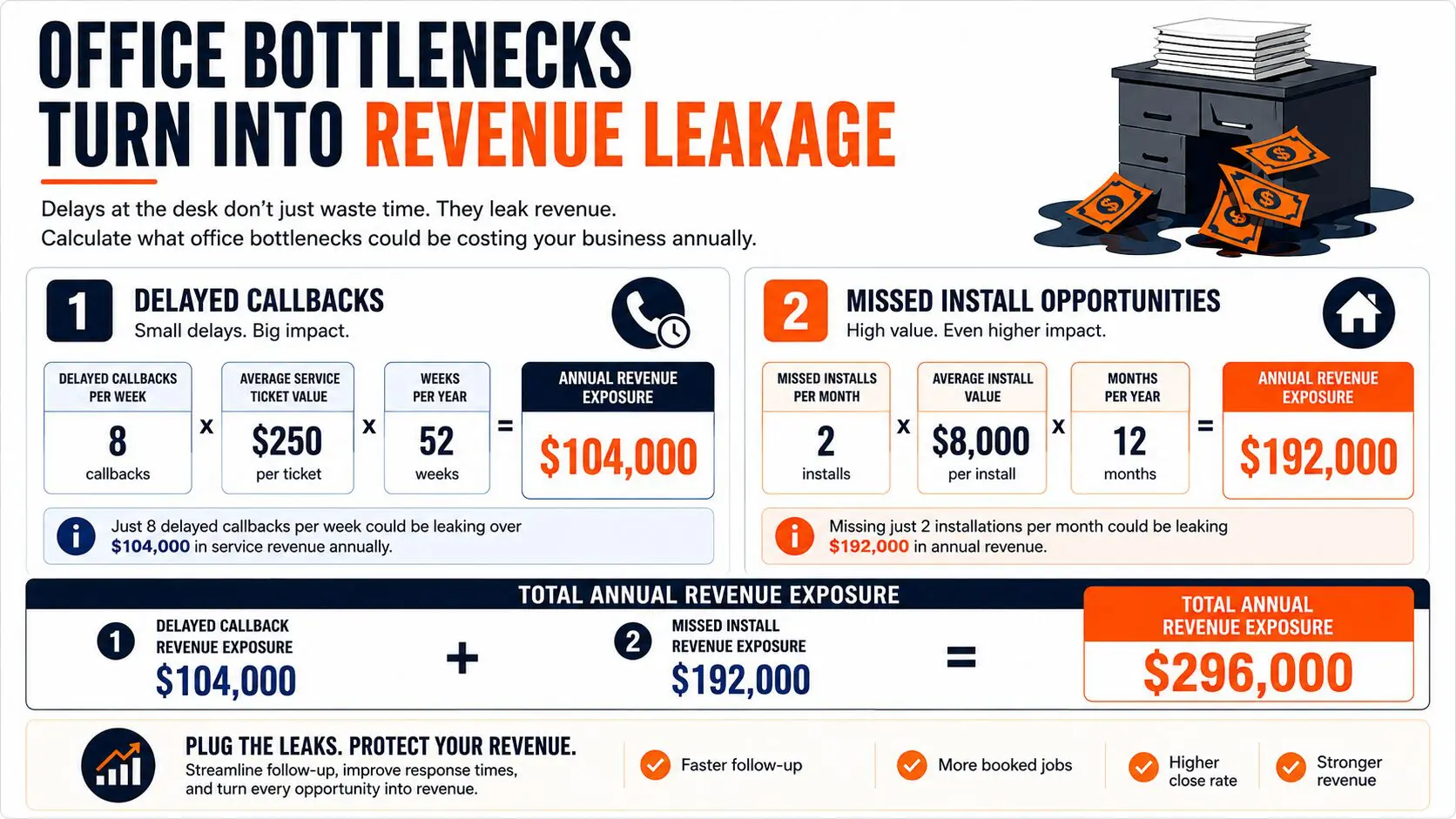
Office bottlenecks cost money because they slow down the path from lead to booked job.
Example:
5 delayed follow-ups per week x $250 average service ticket = $65,000 annual revenue exposure.
Example:
1 missed install opportunity per month x $8,000 average install = $96,000 annual revenue exposure.
These examples are illustrative, not guaranteed outcomes. The point is simple: when the office cannot respond, schedule, dispatch, and follow up consistently, paid opportunities can turn into lost revenue.
The leak is not always in marketing. Sometimes the leak is inside the office workflow.
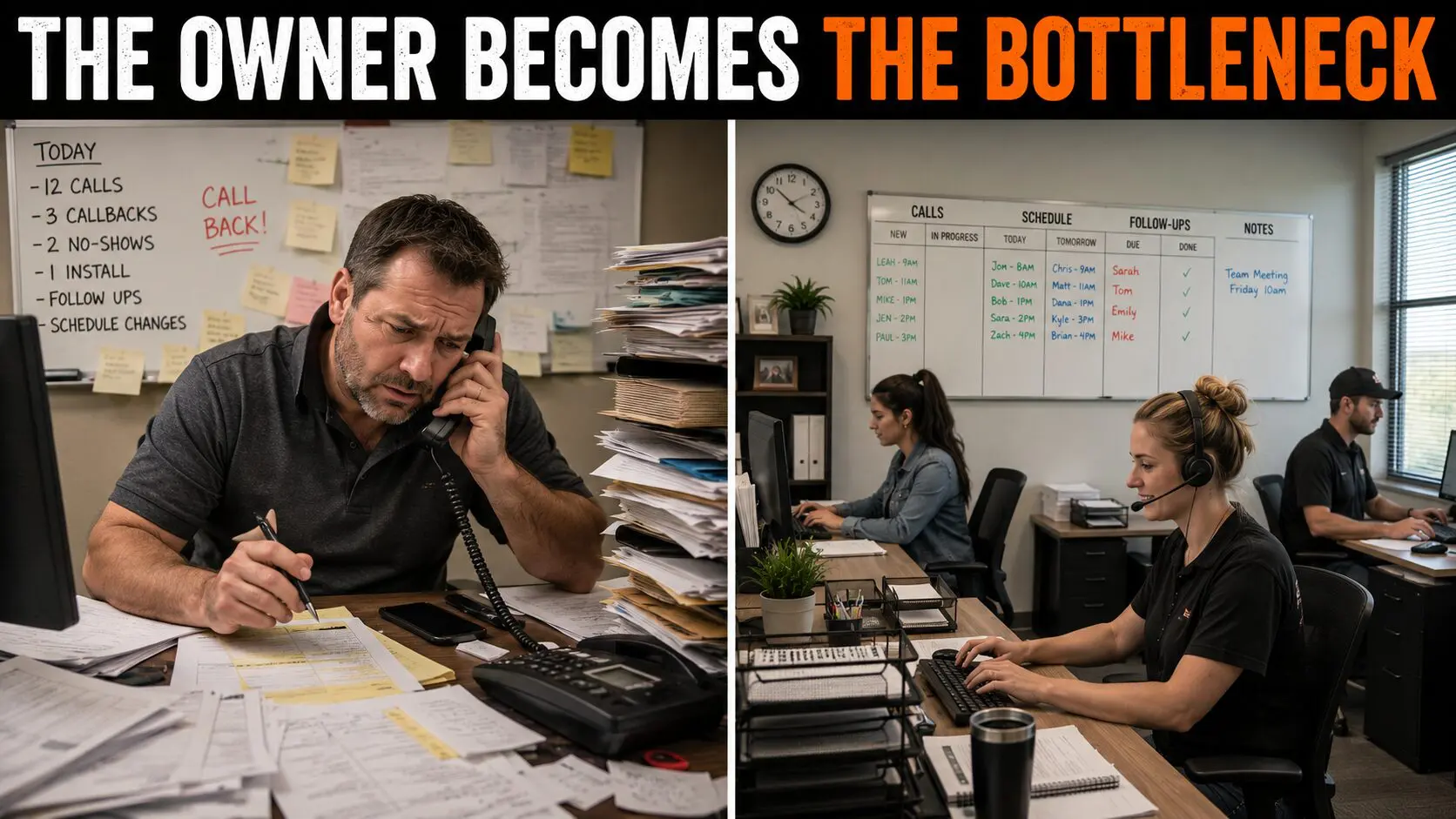
The Owner Should Not Be The Backup Office System
Many contractor owners become the fallback system when the office gets overloaded.
They answer customer questions, chase follow-ups, check dispatch problems, approve schedule changes, and remind the team what needs to happen next.
That may solve the immediate problem, but it creates a bigger one.
If the workflow depends on the owner stepping in every day, the business cannot scale cleanly. The office needs a system that keeps work moving without constant owner rescue.
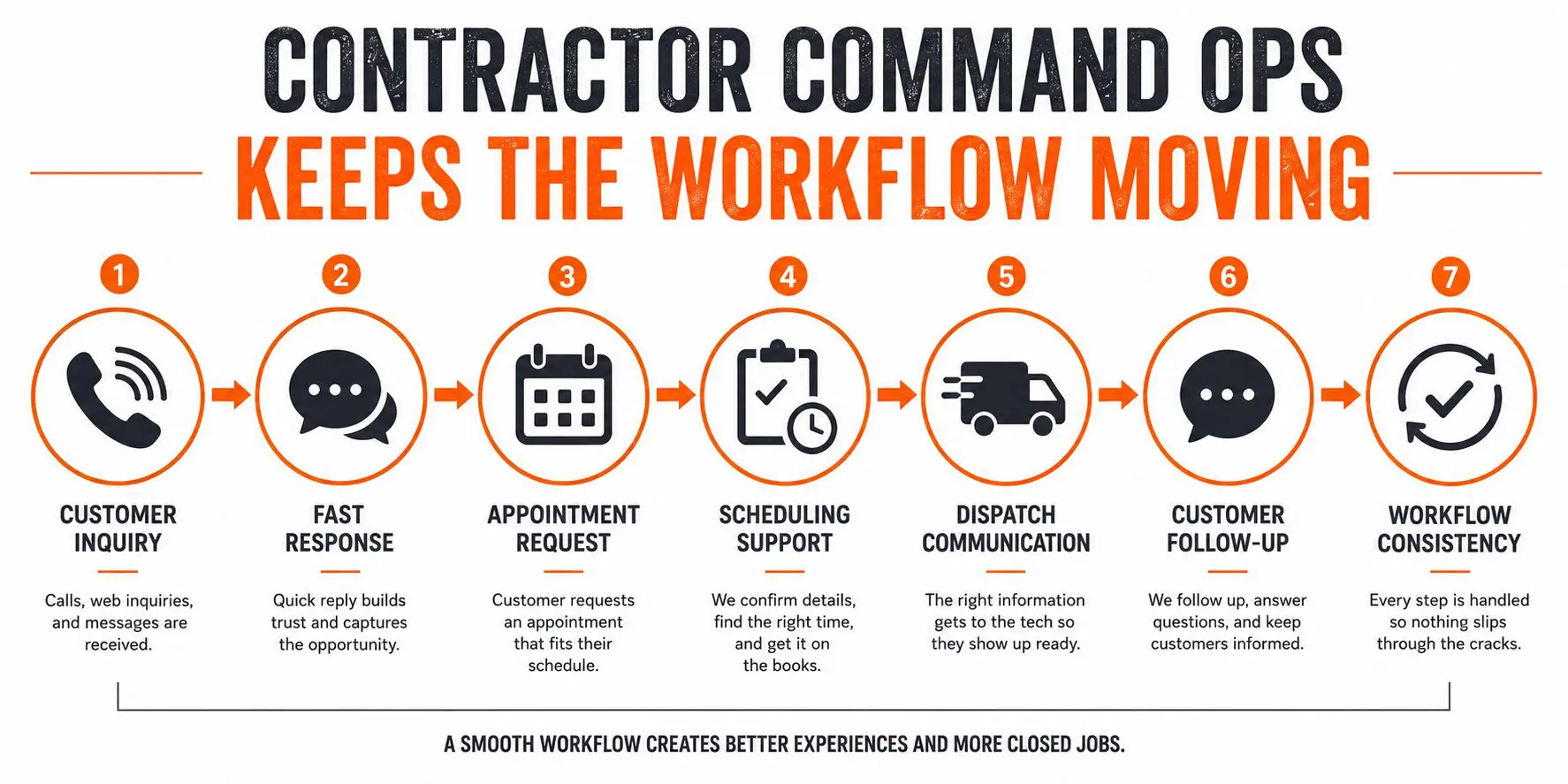
How Contractor Command Ops Helps Reduce Office Bottlenecks
Contractor Command Ops helps contractors identify and reduce the office workflow gaps that create bottlenecks.
The system supports:
- faster lead response
- missed call and after-hours communication workflows
- scheduling coordination
- dispatch communication support
- customer follow-up workflows
- clearer office process control
- reduced owner involvement in daily rescue work
The goal is not more software sitting unused. The goal is a cleaner operating system for the contractor office so leads, customers, scheduling, dispatch, and follow-up keep moving.

Find The Office Bottlenecks Before They Cost More Jobs
Office bottlenecks usually get expensive before they get obvious.
A few missed calls become lost opportunities. A few delayed follow-ups become lost trust. A few scheduling conflicts become wasted technician time. A few owner rescues become a business that cannot scale without constant firefighting.
If the office is overloaded, revenue may already be leaking through the workflow.