
Slow Lead Response Is Quietly Costing Contractors Thousands.
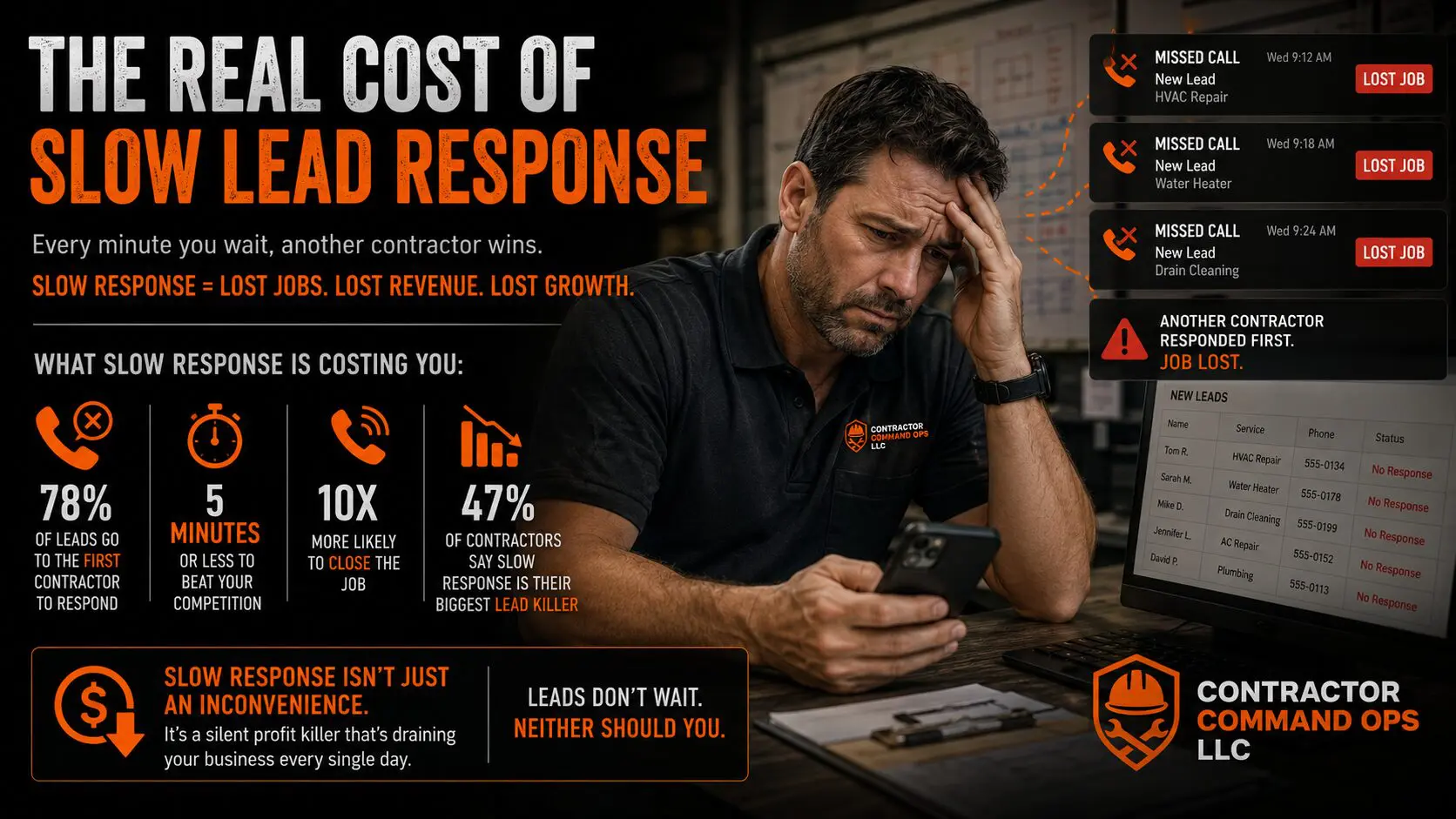
Most contractors think they lose jobs because of pricing. In reality, many lose the opportunity long before pricing is ever discussed because nobody responded fast enough.
A missed callback, a delayed reply, or a web lead that sat too long can quietly cost the business booked work, wasted marketing spend, and lost trust. Slow response does not always look dramatic inside the office. But on the customer side, it feels like uncertainty - and uncertainty sends them to the next contractor.
Homeowners Rarely Wait Around For A Callback
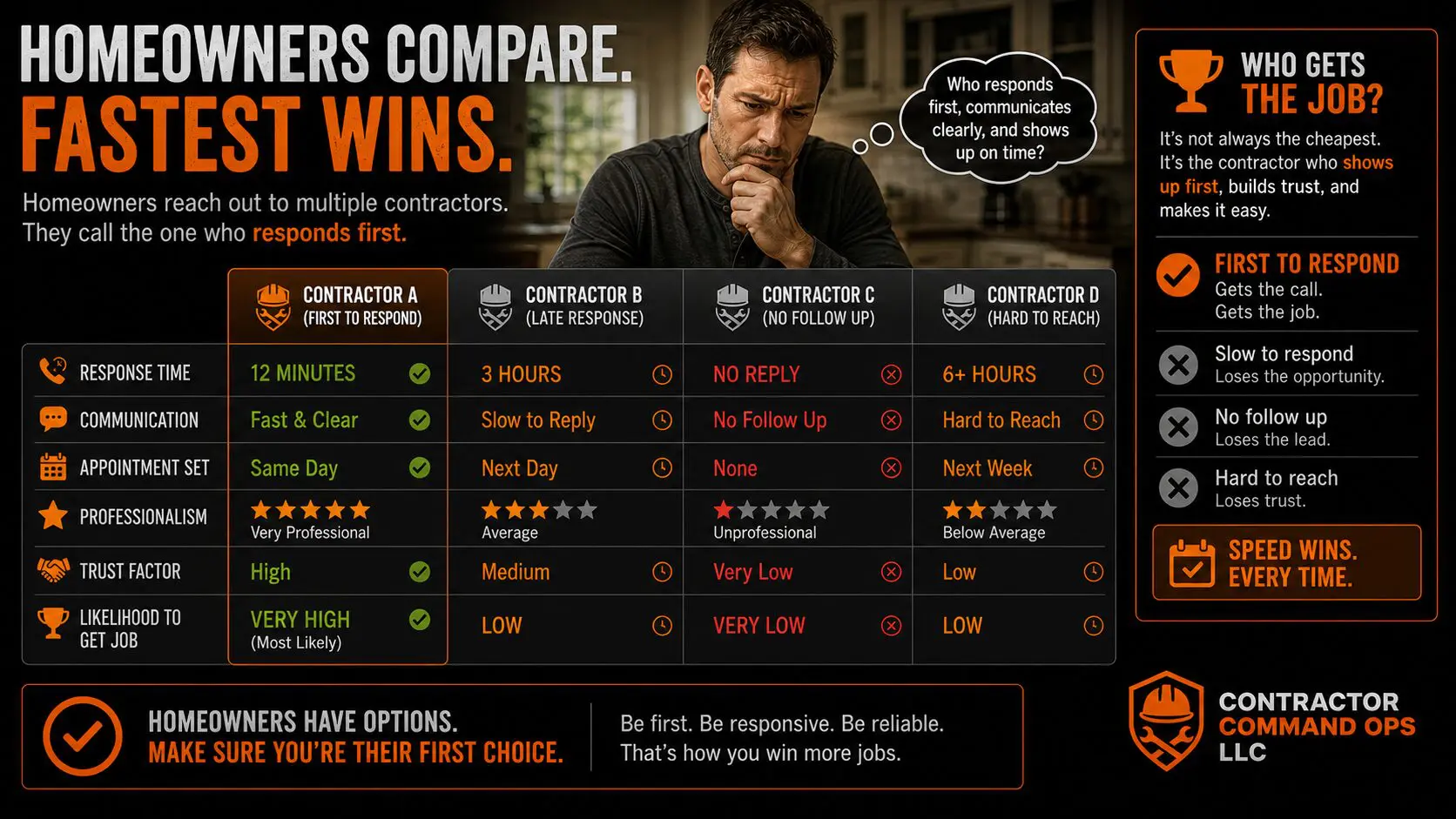
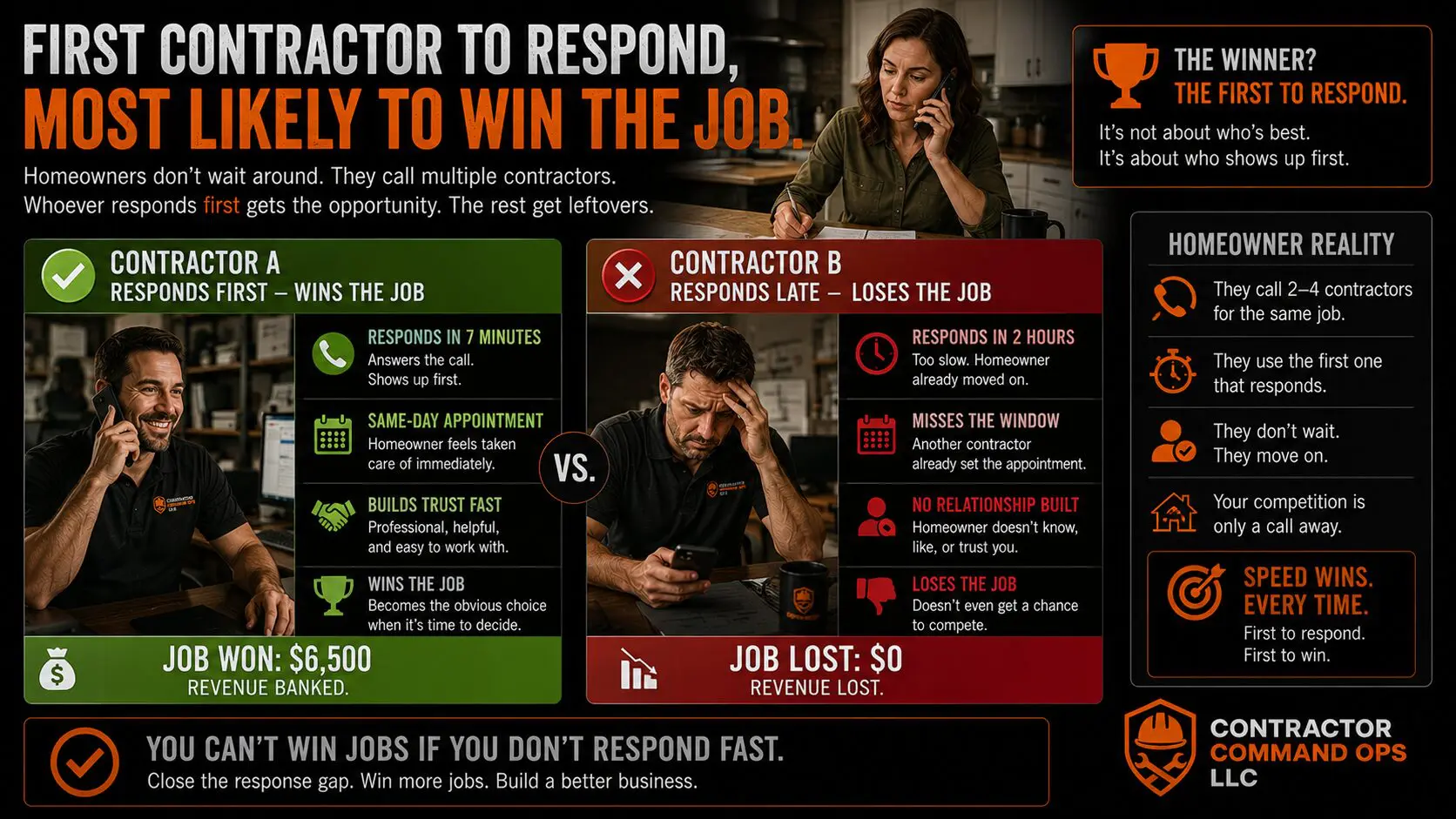
Homeowners facing urgent HVAC, plumbing, electrical, roofing, or repair problems rarely wait around for callbacks. They usually contact multiple contractors at the same time and move forward with whoever responds first.
That means the sales process often starts before price is discussed. The contractor who answers, replies, or follows up first builds immediate trust. The slower contractor may still be qualified, skilled, and fairly priced, but by the time they respond, the homeowner may already have booked someone else.
Slow response does not always look like a major failure inside the business. Sometimes it looks like a voicemail that sat too long, a web lead that waited until morning, a callback list that got buried, or an office that was simply too busy to keep up.
But to the homeowner, slow response feels like uncertainty. And uncertainty sends them to the next contractor.
Lead Value Drops Every Minute You Wait
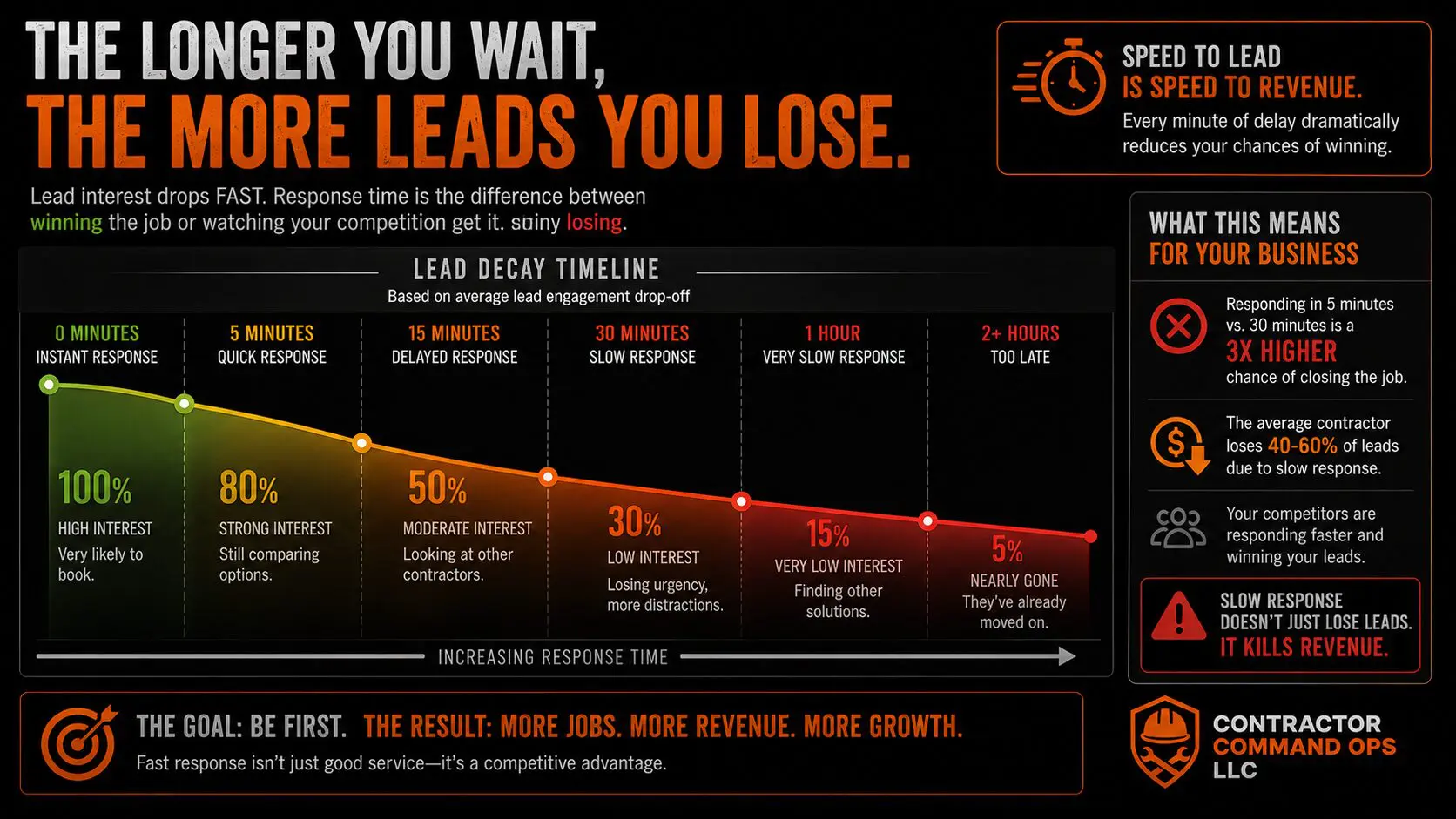
A lead is most valuable when the homeowner first reaches out. That is the moment when urgency, attention, and buying intent are highest.
Every minute of delay lowers the chance of booking the job. The homeowner keeps searching. Competitors keep responding. The problem still needs to be fixed. The longer the delay, the more likely the lead becomes someone else's appointment.
This is lead decay. Contractors often think the lead was bad, the customer was shopping, or the price was the problem. Sometimes that is true. But many times the real problem is that the office response came too late.
A slow response system quietly lowers conversion rates even when marketing is working.
Slow Response Times Cost Real Revenue
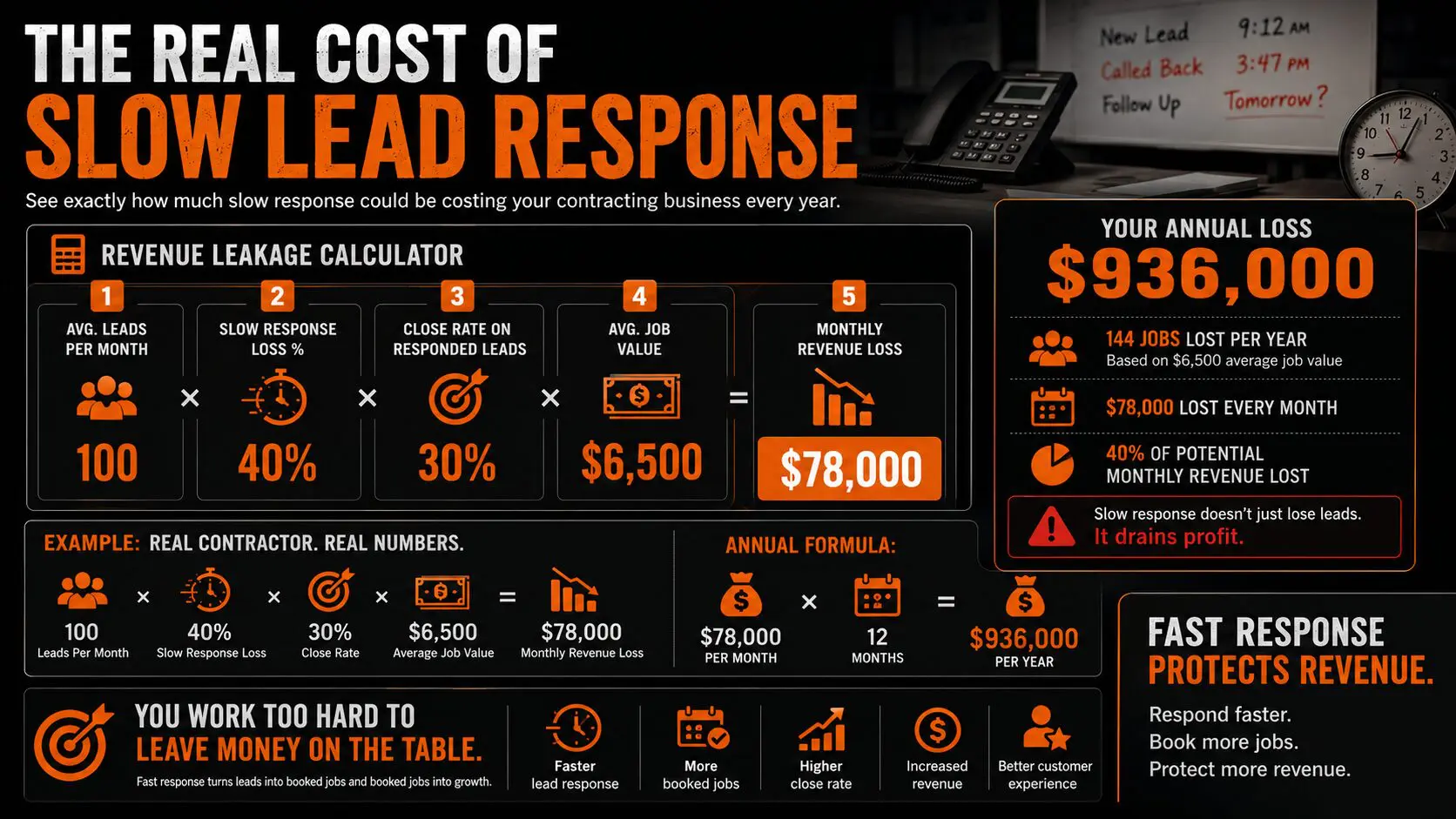
Slow response creates measurable revenue leakage.
Example:
5 missed install opportunities per month x $8,000 average install = $480,000 annual revenue leakage.
Another example:
10 missed service opportunities per week x $250 average service ticket = $130,000 annual lost revenue.
These numbers are examples, not guarantees. The point is that slow response is not just an office inconvenience. It is a revenue problem.
Most contractors track advertising spend, booked jobs, invoices, and close rates. Fewer track the jobs that never made it into the system because nobody responded fast enough.
That is where the leak hides.
You Already Paid For The Lead
When a contractor pays for SEO, Google Ads, Facebook ads, lead platforms, truck branding, referrals, or website traffic, the lead is not free. Money was already spent to create the opportunity.
If the office does not respond quickly, the marketing investment leaks out the back door.
This is why more leads do not always fix the problem. More lead volume can actually make the office bottleneck worse if response systems are already overloaded.
Before spending more money to generate demand, contractors need to know whether the office can handle the demand they already have.

Where Contractor Offices Break Down
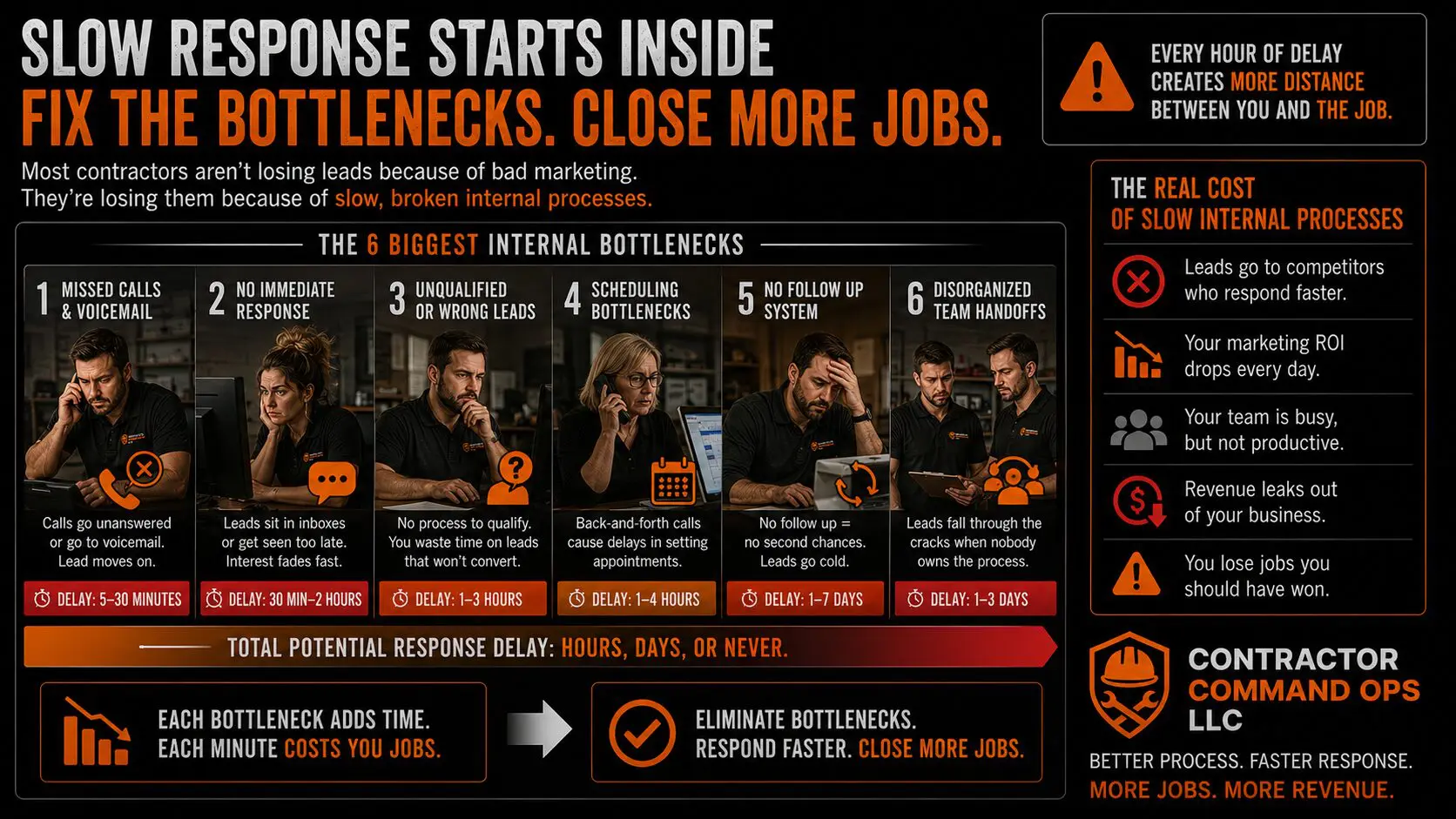
Slow lead response usually comes from operational bottlenecks.
Common causes include:
- Incoming calls stacking up
- Office staff juggling scheduling and dispatch
- Technicians interrupting the office for updates
- After-hours inquiries going unanswered
- Weekend leads waiting too long
- Web forms sitting until the next business day
- Callback lists growing faster than staff can handle
- Estimate follow-up falling behind during busy season
The office becomes the choke point. Not because the people are lazy. Because the workflow is overloaded.
Busy season does not create every problem. It exposes the office systems that were already too fragile.
The Faster Contractor Usually Wins
The first contractor to respond does more than answer a question. They take control of the conversation.
Fast response creates confidence. It signals professionalism. It gives the homeowner a path forward. It makes scheduling easier. It reduces uncertainty.
By the time a slower competitor calls back, the homeowner may already have an appointment booked.
This is why speed to lead can win more jobs than price. Price still matters, but price only matters if the contractor gets into the conversation before the decision is already made.
How Contractor Command Ops Closes The Response Gap
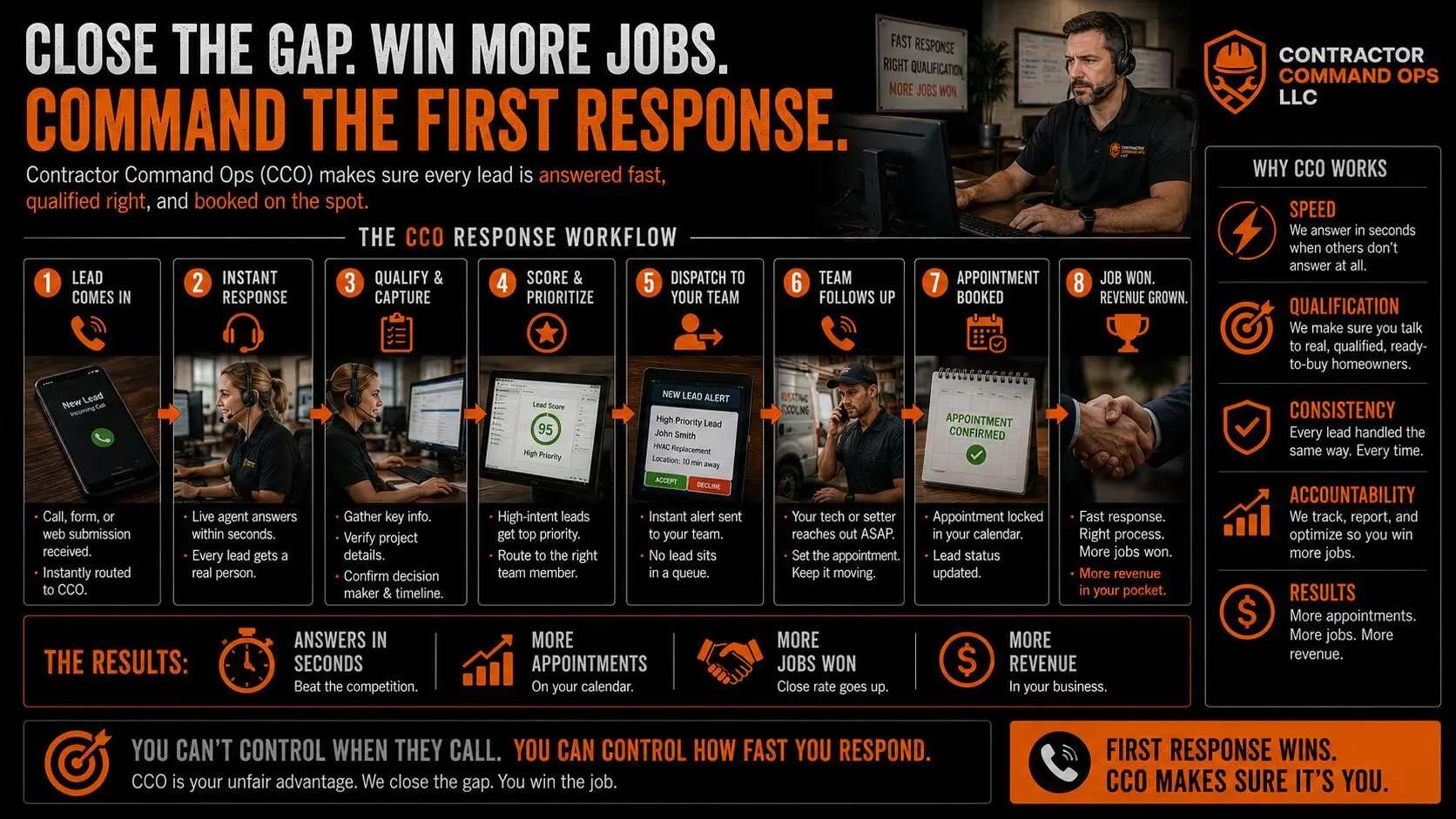
Contractor Command Ops helps home-service contractors reduce the operational gaps that slow down lead response.
The system supports:
- Faster lead response
- After-hours communication workflows
- Appointment request handling
- Scheduling coordination
- Dispatch communication support
- Customer follow-up workflows
- Office workflow consistency
The goal is not to add another dashboard for the owner to babysit. The goal is to keep the office moving so calls, leads,

Most Contractor Leads Happen On Mobile
Homeowners search from their phones. They call from their phones. They submit forms from their phones. They expect quick replies on the same device.
If the mobile path is slow, confusing, or delayed, the lead can disappear before the contractor even realizes there was an opportunity.
That is why the response workflow and the conversion page need to be mobile-first. The easier it is for a homeowner or contractor prospect to take action, the less revenue leaks from friction.
Your Competitors Are Responding Faster Than You Think.
If your office responds too slowly, your competitors are already booking the customer.
Delayed callbacks, missed after-hours opportunities, slow follow-up, and overloaded office workflows all make it easier for faster competitors to win the conversation first.
If the office cannot respond clearly and consistently, revenue may already be leaking long before price is ever discussed.