

How Dispatch Breakdowns Cost Contractors Jobs
When dispatch communication breaks down, the damage does not stay inside the office. Technicians wait, customers get frustrated, schedules fall apart, emergency calls slip, and revenue leaks through the day.
Dispatch is where office communication turns into field execution. If that workflow is slow, unclear, or inconsistent, the business feels it in missed jobs, wasted technician time, and customers who lose confidence before the work even starts.
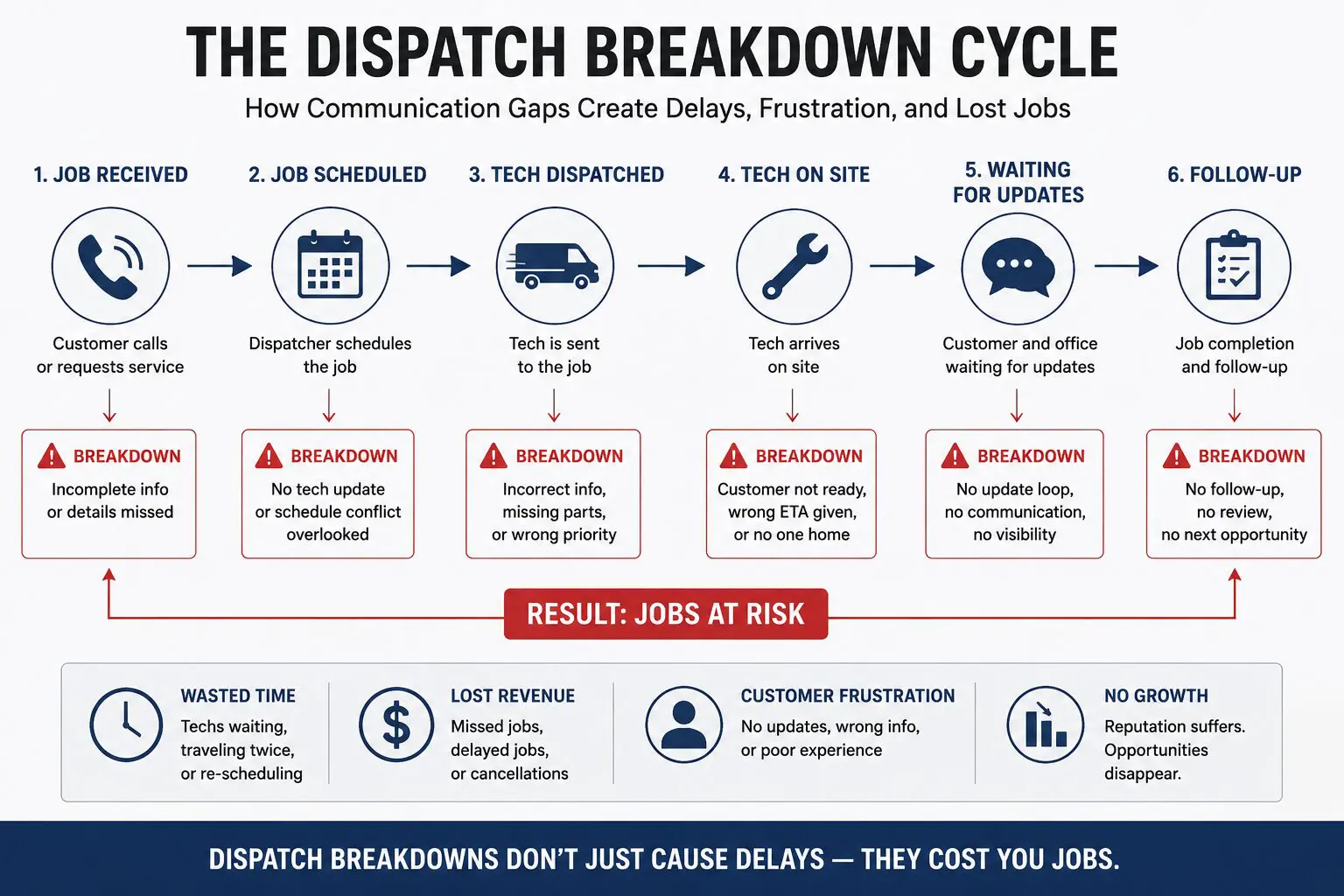
Where Contractor Dispatch Starts To Break Down
Dispatch breakdowns usually start small.
A technician needs job details. A customer asks for an arrival update. A schedule changes. A call comes in while the office is already handling another issue. A dispatcher gets pulled into three conversations at once.
One delay becomes two. Two delays become a backed-up schedule. A backed-up schedule becomes frustrated customers, rushed technicians, missed opportunities, and jobs slipping through the cracks.
Dispatch is not just a field problem. It is an office workflow problem that shows up in the field.
Technicians Lose Time When Dispatch Communication Slows Down
Technicians need the right information at the right time.
When dispatch communication slows down, technicians wait for job details, customer notes, gate codes, route updates, schedule changes, or next-job assignments. That waiting time may not always show up clearly on a report, but it still costs money.
Every delay reduces daily capacity. A technician who loses time waiting on updates may complete fewer jobs, arrive late to the next call, or need office support that pulls the dispatcher away from incoming leads.
That is how dispatch breakdowns create a hidden drag on field productivity.

Customers Lose Confidence When Updates Break Down
Customers do not see the internal chaos. They only see the result.
They were told someone would arrive. Then the window shifts. They call for an update. The office has to check with the technician. The technician is waiting on dispatch. The dispatcher is handling another issue.
From the customer's perspective, the company feels disorganized.
That weakens trust before the technician even arrives. In urgent home service situations, unclear communication can push the customer toward another contractor who responds faster and communicates more clearly.

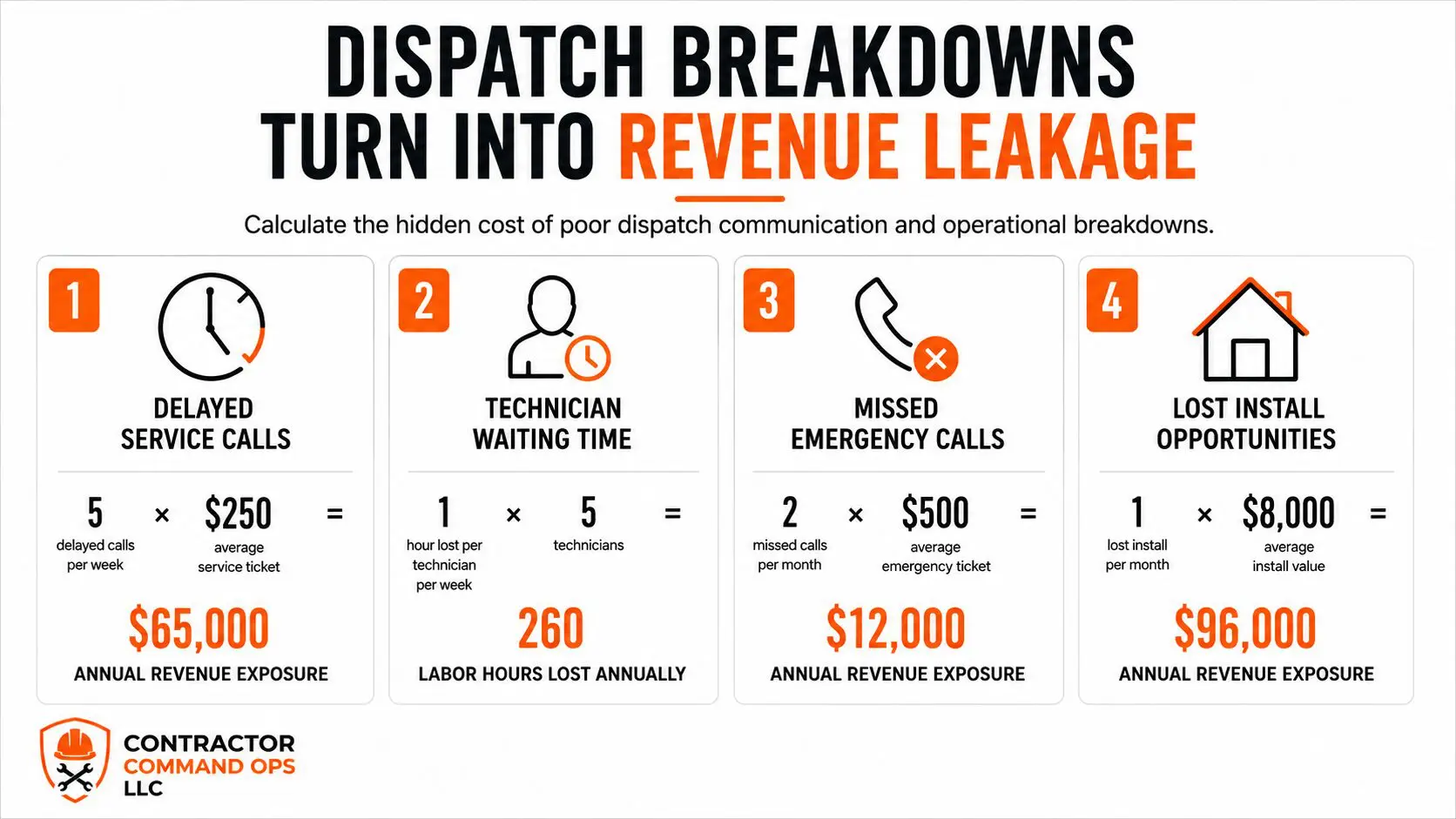
Dispatch Breakdowns Turn Into Revenue Leakage
Dispatch breakdowns cost money because they reduce the number of jobs the business can handle cleanly.
Example:
4 delayed service calls per week x $250 average ticket = $52,000 annual revenue exposure.
Example:
1 lost install opportunity per month x $8,000 average install = $96,000 annual revenue exposure.
These examples are illustrative, not guaranteed outcomes. The point is simple: dispatch delays are not just daily inconvenience. They can create measurable revenue exposure through lost capacity, missed opportunities, customer frustration, and wasted technician time.
The leak often hides inside the schedule.
Busy Dispatch Is Not The Same As Controlled Dispatch
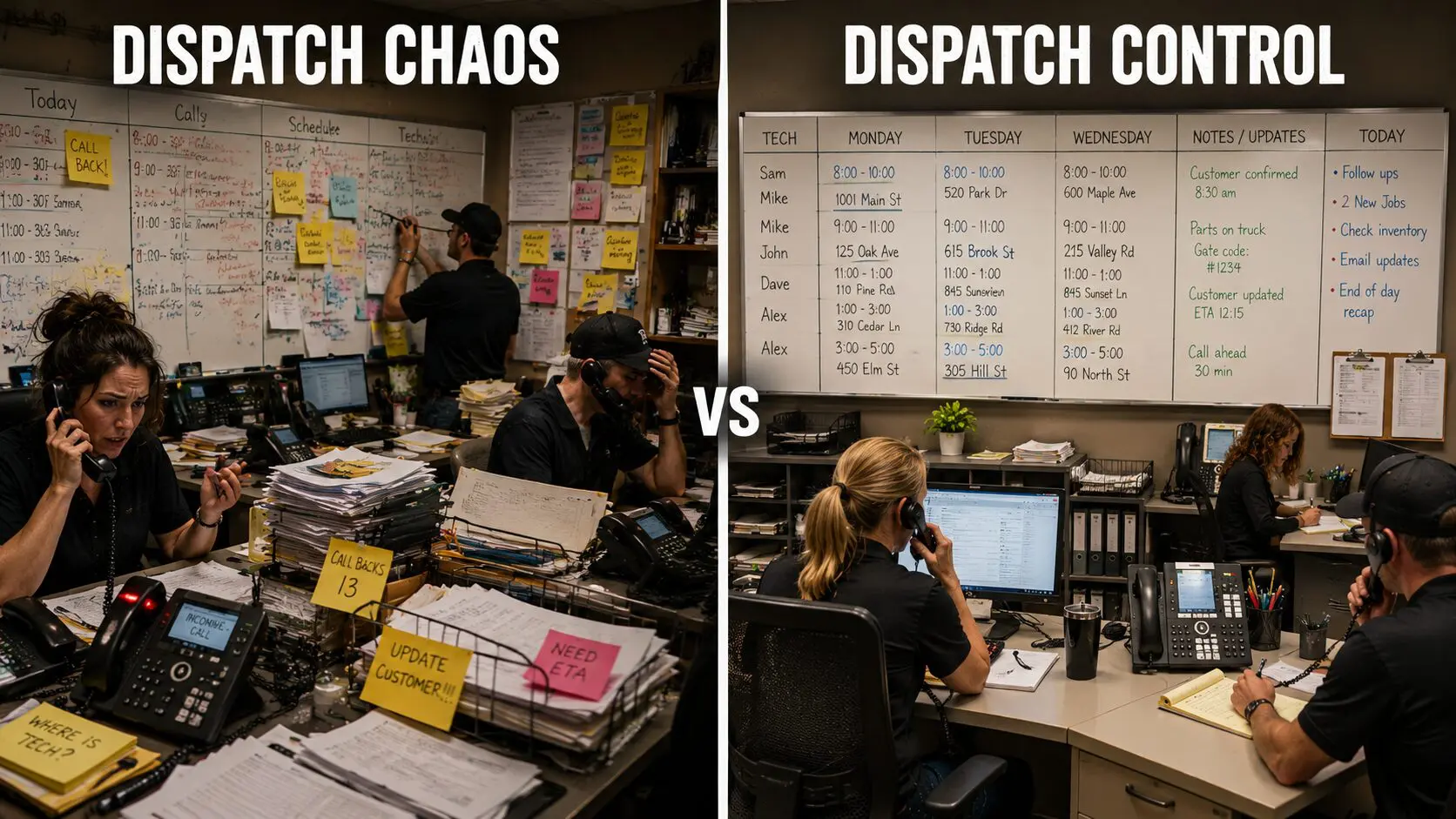
A busy dispatch board can make the business feel productive. But activity is not the same as control.
Control means the office knows where technicians are, what customers need, which calls require updates, where schedule changes are happening, and which jobs need follow-up.
Without control, dispatch becomes reactive. The office spends the day answering interruptions instead of moving the workflow forward.
Contractors do not need more chaos moving faster. They need a cleaner communication structure.
How Contractor Command Ops Helps Support Dispatch Communication
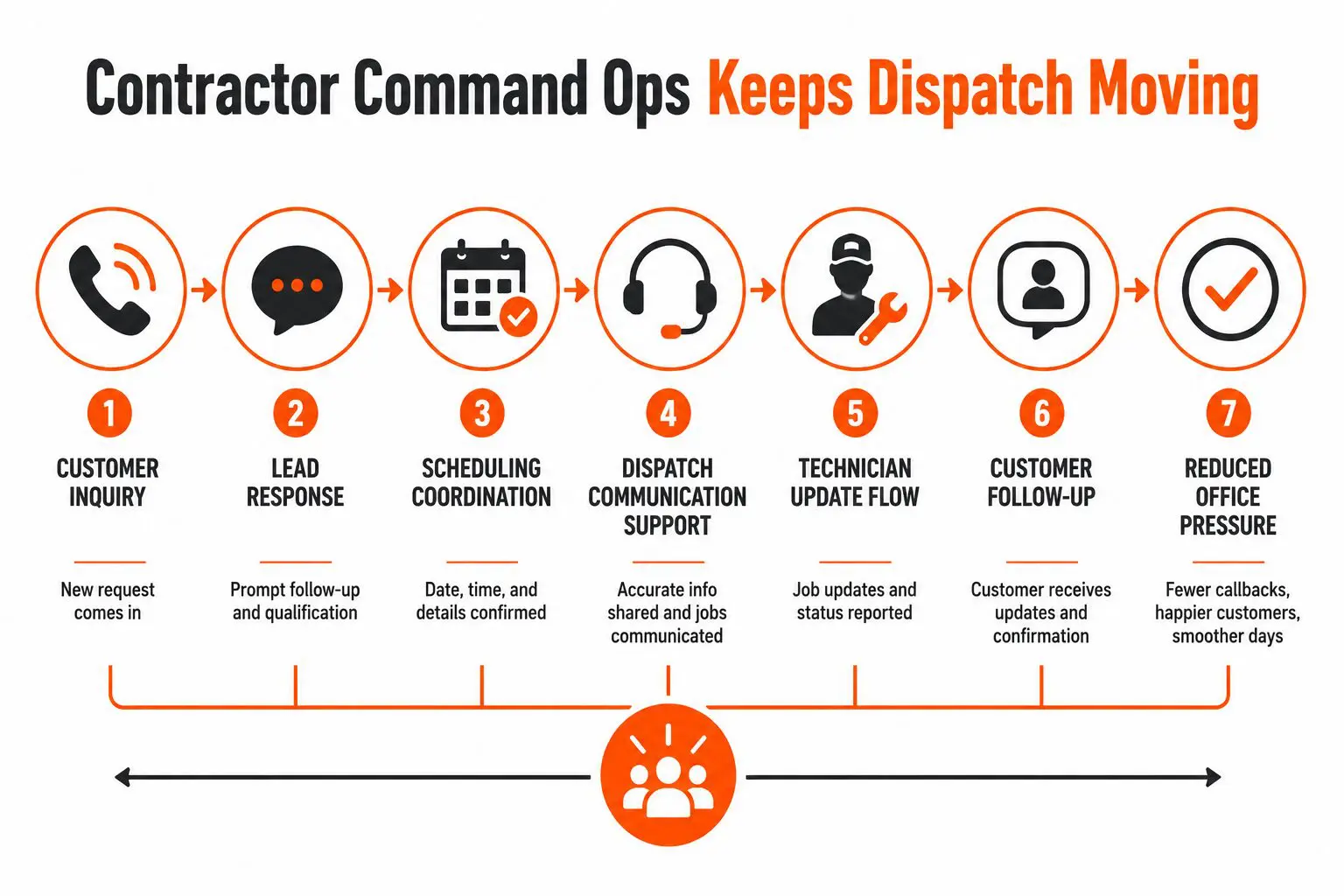
Contractor Command Ops helps contractors reduce the office communication gaps that create dispatch breakdowns.
The system supports:
- faster lead response
- appointment request handling
- scheduling coordination
- dispatch communication support
- customer follow-up workflows
- after-hours communication workflows
- office workflow consistency
The goal is not to replace the dispatcher. The goal is to reduce avoidable breakdowns, improve communication flow, and keep the office from becoming the daily bottleneck.
Find Out Where Dispatch Is Leaking Revenue
Dispatch problems usually get expensive before they get obvious.
A few late updates become frustrated customers. A few technician delays become lost capacity. A few scheduling conflicts become missed opportunities.
If dispatch communication is slowing technicians down, frustrating customers, or forcing the owner to step in, revenue may already be leaking through the workflow.

Find Out Where Dispatch Is Leaking Revenue